Push to green in nine seconds.
The workflow file you already have, run in an isolated sandbox per run, one check per job reported at the head. It is the CI half of the evidence.
Request an inviteThree jobs, one page.
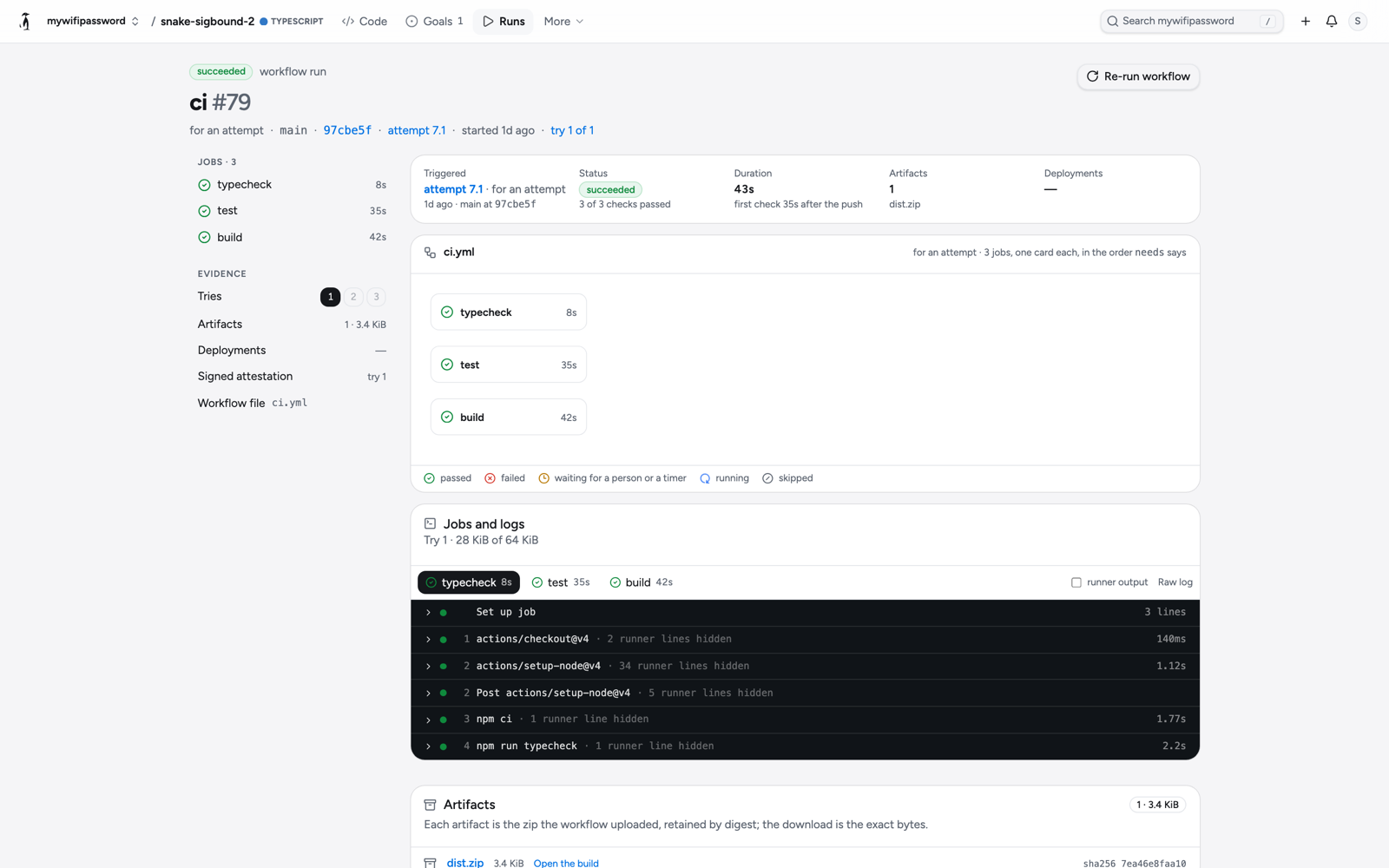
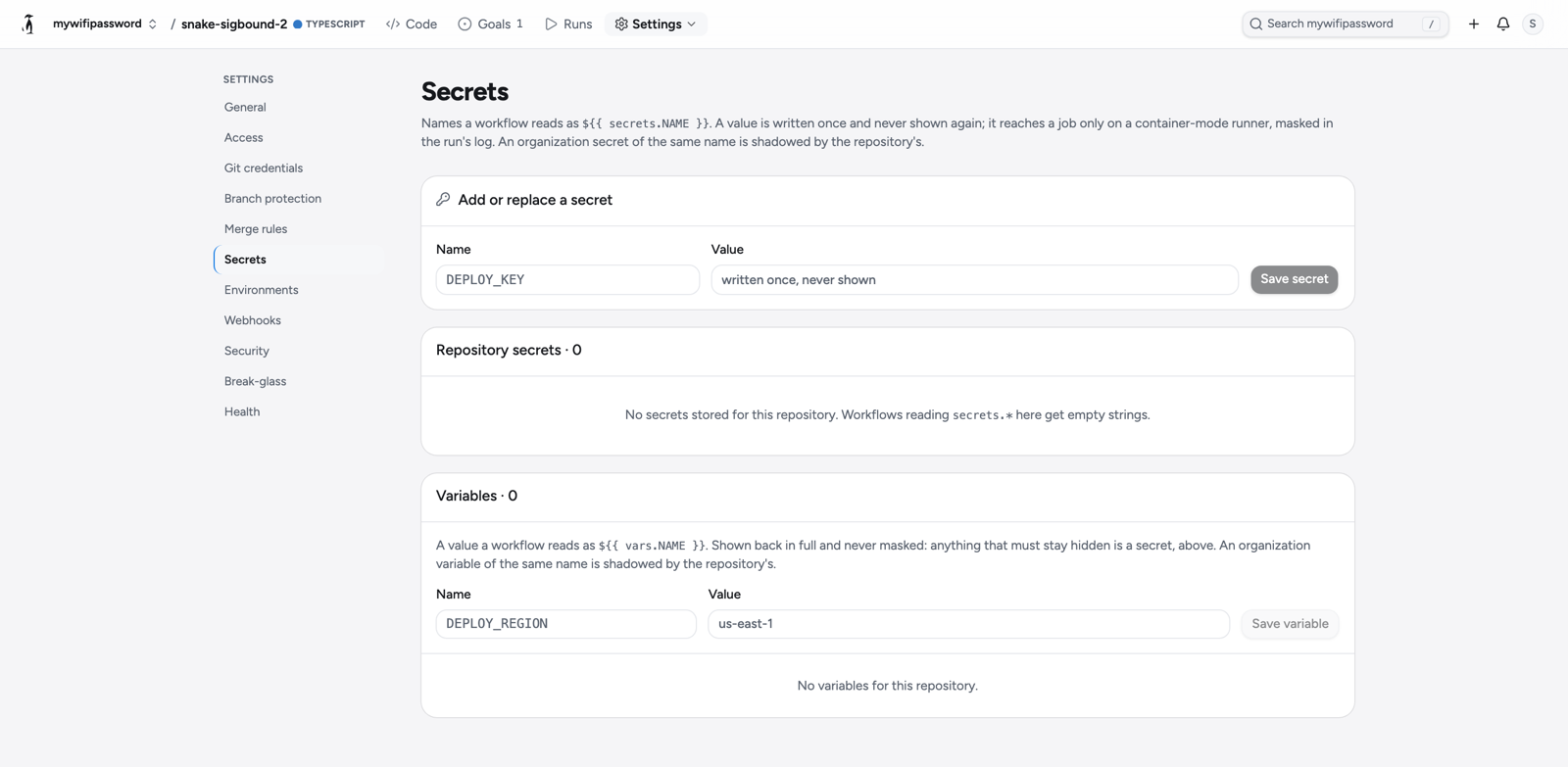
Every job as a card in the order the workflow says, the log of each step underneath, and the artifact the build uploaded. This run is the CI half of the evidence for attempt 7.1.
The file you already have
Workflows live in .sigbound/workflows/ or .github/workflows/, in the GitHub Actions format. Jobs, steps, needs, matrices, uses, secrets and environments read the same way.
# .sigbound/workflows/ci.yml, or the .github/workflows/ci.yml you already have
name: ci
on: [push]
jobs:
  typecheck:
    runs-on: ubuntu-latest
    steps:
      - uses: actions/checkout@v4
      - uses: actions/setup-node@v4
      - run: npm ci
      - run: npm run typecheck
  test:
    runs-on: ubuntu-latest
    steps:
      - uses: actions/checkout@v4
      - uses: actions/setup-node@v4
      - run: npm ci
      - run: npm test
  build:
    runs-on: ubuntu-latest
    needs: [typecheck, test]
    steps:
      - uses: actions/checkout@v4
      - uses: actions/setup-node@v4
      - run: npm ci
      - run: npm run build
      - uses: actions/upload-artifact@v4
with: { name: dist, path: dist }Where it runs
Isolation first, then speed. From a push to a green three-job workflow with the sandboxes already warm is 9 seconds; the measurement is on the speed page.
A run that fits gets its own microVM, started for it and gone after it. Nothing from one run is on the disk of the next.
The repository cache is warmed before the push lands, so the first check starts in seconds, not after a clone.
Each job reports one check at the head, in the order needs says. Three jobs, three checks, on the evidence page.
Logs by step, with runner lines folded away. What a workflow uploads is kept by digest, and the download is the exact bytes.
Every run of every workflow.
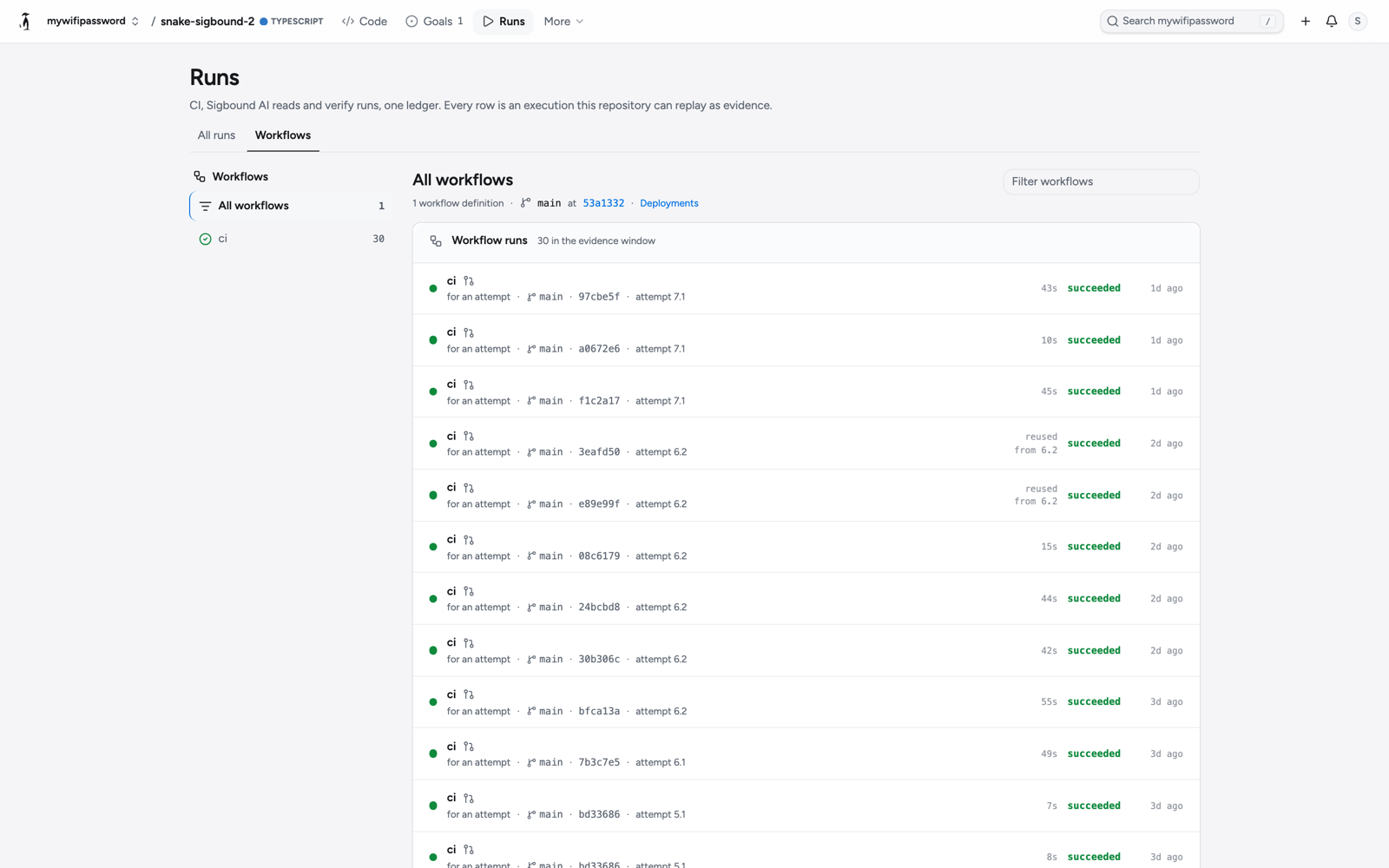
One workflow definition on main, thirty runs in the evidence window, each one tied to the attempt and the head it ran for. A head that was already verified reuses the earlier evidence instead of running again.
CI, reads and verify runs, one ledger.
Every run the repository can replay as evidence in one list: the workflow runs, Sigbound AI's reads, and the gate's own verify and land runs. Filter by state or by goal.
Secrets and environments
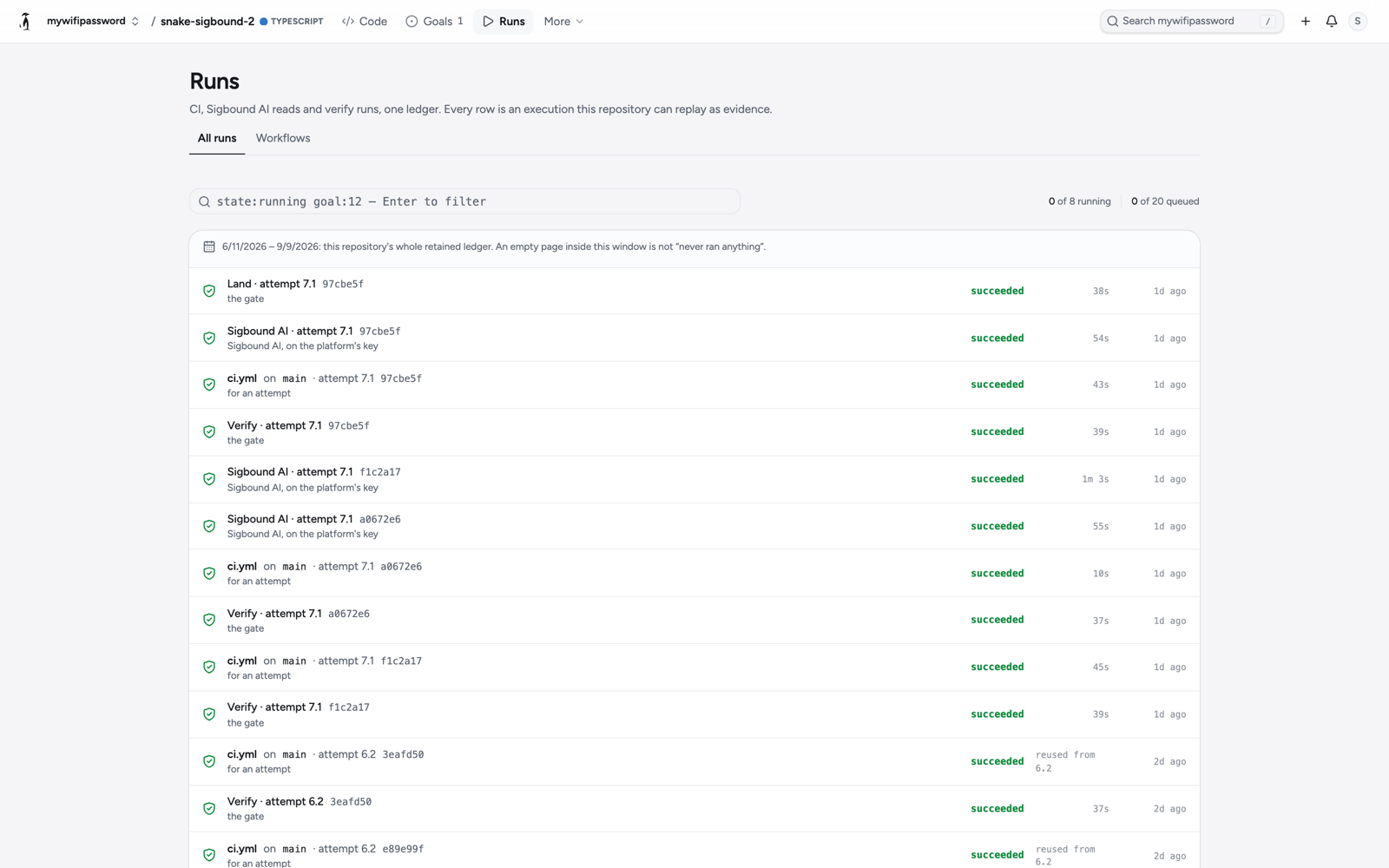
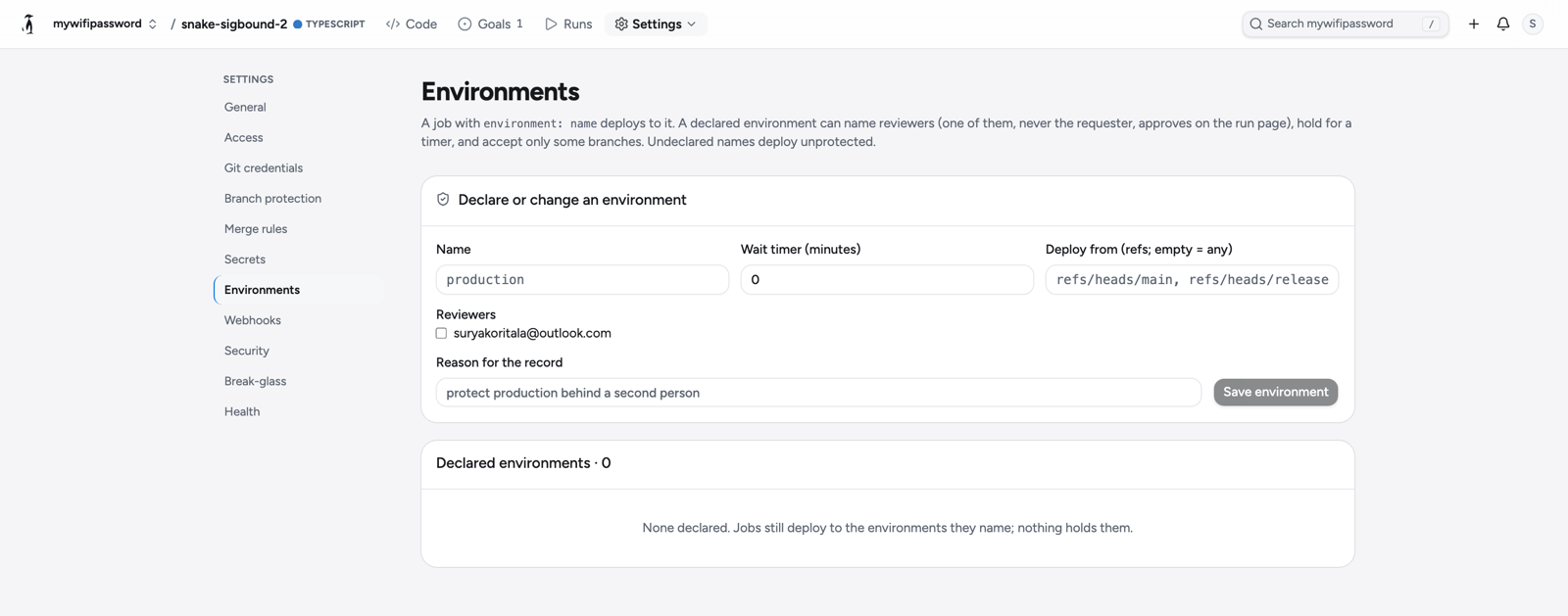
A secret is written once and never shown again; it reaches a job only inside its scope, masked in the log. An environment can name reviewers, hold for a timer, and accept only some branches.
Read the rest
Workflows, sandboxes, artifacts, and what the run page shows. CI
The checks at the head are half of the evidence a person approves; the signed merge record quotes them. How it works